Osteoporosis in Older Women: A Qualitative Exploration to Guide Improvements in Osteoporosis Care

Share:

Background
Osteoporosis is a condition that weakens bones and increases the risk of fractures, leading to pain, disability and, in some cases, premature death. Around 180,000 fractures are linked to osteoporosis each year in the UK, costing an estimated £4.4 billion annually. Women are four times more likely than men to develop osteoporosis and often experience fractures at an earlier age. Despite the availability of national guidelines, osteoporosis remains underdiagnosed and undertreated in primary care. Previous work with older women found that many felt unseen, unheard and poorly informed about their health needs, highlighting concerns about the quality of osteoporosis care and support available to women aged 70 and over.

Aims and Objectives
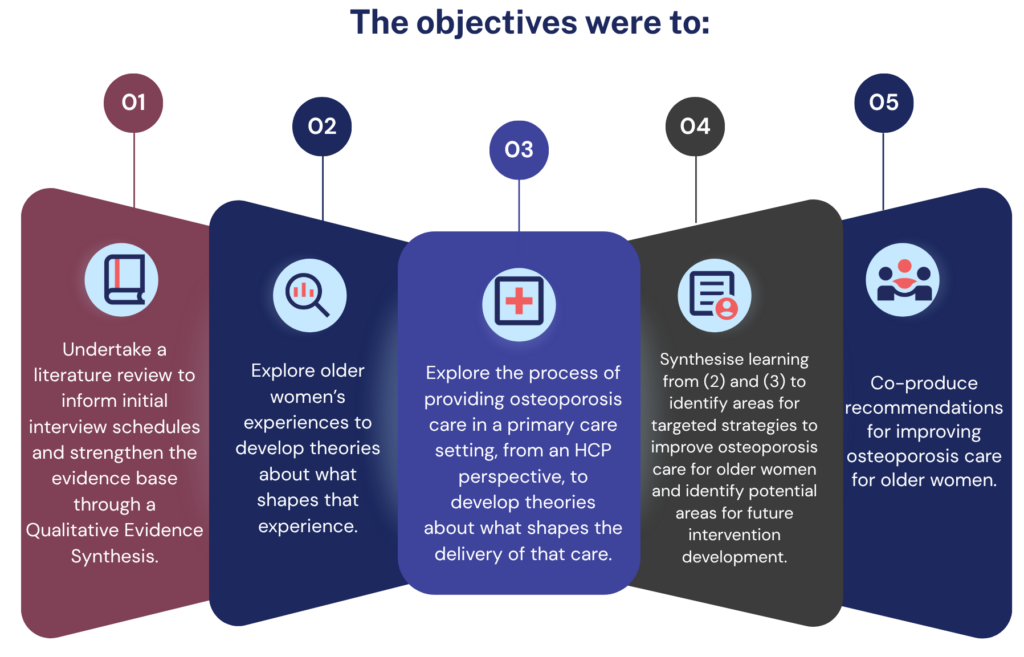
The aim of this study is to understand what could improve osteoporosis care for older women and to develop recommendations for better diagnosis, treatment and ongoing management.

The objectives are to:

  • Explore the experiences of older women living with osteoporosis.
  • Understand the perspectives of healthcare professionals involved in osteoporosis care.
  • Identify what works well and where improvements are needed in the diagnosis, treatment and management of osteoporosis.
  • Compare findings with current clinical guidelines and best practice recommendations.
  • Co-produce recommendations for improving osteoporosis care and identify priorities for future research.


Methods
This is a qualitative study involving older women aged 70 years and over and healthcare professionals involved in osteoporosis care. Researchers will build on previous literature reviews and patient engagement work to develop interview questions and identify key issues for investigation.

The study will:

  • Conduct interviews with older women and healthcare professionals about their experiences of osteoporosis diagnosis, treatment and management.
  • Use an iterative approach, reviewing findings after groups of interviews and discussing emerging themes with participants and stakeholders.
  • Continue working with older women and professionals throughout the project to interpret findings and shape recommendations.
  • Compare findings against existing osteoporosis guidelines to identify opportunities for improvement.
  • Develop recommendations for service improvement and identify future research priorities.
  • A champion from the Royal Osteoporosis Society is a co-applicant on the study and will contribute through the Project Management Group, alongside wider public involvement throughout the research.

Further Information
The study is led by Anne Heaven, Research Programme Manager at Bradford Teaching Hospitals NHS Foundation Trust, and sits within the NIHR ARC Yorkshire & Humber Health and Care in our Ageing Society theme under Older People.


The project ran from April 2024 to September 2025.

The study focuses on improving care for women aged 70 years and over, addressing inequalities associated with age and sex, and supporting better implementation of national osteoporosis guidelines.

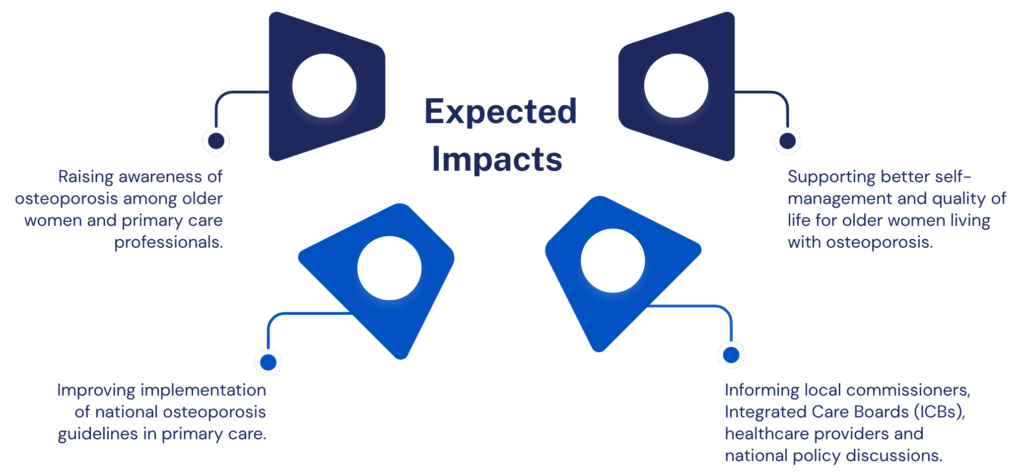
Expected impacts include:

  • Raising awareness of osteoporosis among older women and primary care professionals.
  • Improving implementation of national osteoporosis guidelines in primary care.
  • Supporting better self-management and quality of life for older women living with osteoporosis.
  • Informing local commissioners, Integrated Care Boards (ICBs), healthcare providers and national policy discussions.

Details:

Theme:
Status:
Currently Underway

Team Contact:

Anne Heaven (Anne.heaven@bthft.nhs.uk)

Other projects

Hearing Loss in Later Life Study: A qualitative investigation of the barriers and facilitators to managing hearing loss for older adults living with frailty

BackgroundHearing loss and frailty are both common in later life and can have a significant impact on wellbeing, independence and quality of life. Many older adults living with frailty also...

Wellbeing in Later Life in Bradford (WeLL-Bradford)

BackgroundWellbeing in later life is not experienced equally. Factors such as frailty, ethnicity, gender, income and social circumstances can combine to influence how well people age and the care and...

ACMICS: A hospital anticholinergic clinical decision support system

Designing and pilot testing an anticholinergic medication index clinical decision support system (ACMICS) for use in hospitals to support safer prescribing for older people at risk of medication-related harm. BackgroundAnticholinergic...

Do you have a research idea or want to learn more about our work and how it could be implemented in your area?