By Inayah Sher
In 2003, I was involved in a community research project looking at whether Pathan girls were being denied the opportunity to continue their education after the age of 14. This was very personal to me because it was something I had been denied myself.
At the time, I didn’t really understand research, but it opened my eyes to what research could actually do. By asking questions and listening to people, you can find out what is really happening within a community. You can bring things out into the open, educate people and hopefully make a difference.
That stayed with me, although it was many years before I became involved in research again.
Years later, I became involved because of my own experience caring for my father. I have had three people very close to me go through palliative care: my father, my father-in-law and my brother-in-law. My father was the person I personally cared for.
Although my father received good care at Bradford Royal Infirmary, I felt there was still room for improvement. I became particularly aware of the difficulties faced by patients with limited English, but also families who are suddenly faced with terminal illness and don’t know what their rights are, what support is available or who they can turn to.
By the time I became involved in research, my father had sadly passed away. I wanted to get involved because I wanted to improve patient care. I didn’t want other families to go through some of the difficulties and challenges that we had experienced.
I also felt there was sometimes a breakdown between patients, families and health professionals. There are so many brilliant health professionals who provide excellent care, but communication can still break down. I wanted to understand that better and look at how we could bring people together rather than focus on blame.
When Shahid Islam, NIHR ARC Yorkshire & Humber (YH ARC) Patient and Public Involvement and Engagement Lead, first asked me if I would be willing to speak to a research doctor about my experience caring for my father, I was very hesitant. I wasn’t sure how I was going to explain something so personal to me. How could I explain something so personal to a doctor who I thought would only understand it from a research perspective? I wondered whether we would really understand each other.
But I knew I wanted to tell my story because I didn’t want another daughter or another family to go through what we had experienced.
I was so wrong about Dr Jamilla Hussain. We immediately clicked. She told me she was really looking forward to hearing about my father, and I could feel it in her voice. She was a mother, a daughter and a Pakistani woman, and that made everything so much easier for me. It allowed me to share things that I was too scared to share.
Shahid really did open that first door for me, and I’m so thankful to him for that opportunity. He gave someone like me a voice I didn’t know I had.
Following those conversations, I became involved in Dr Jamilla Hussain’s research exploring the experiences of Pakistani women and palliative care. I initially volunteered, spending around six months learning about the project and working alongside Dr Hussain. She later asked if I would consider becoming a community researcher, and I agreed.
That was really where my research journey started properly.
Working alongside Dr Hussain, I contributed to research exploring experiences of death, dying and grief among Pakistani women, whose voices are often underrepresented in research. I helped identify and recruit participants, conducted interviews within the community, contributed to discussions about the findings and supported sharing the results. The project demonstrated how community researchers can be involved effectively and ethically in health research, and the learning helped inform Dr Hussain’s subsequent NIHR Advanced Fellowship. Today, I continue to support this work as a member of the Fellowship’s Patient and Public Involvement and Engagement (PPIE) panel.
I was already a community campaigner and had been doing a lot of work within my community. I have good links with people across Bradford and beyond. I think people trust me because I’m approachable, I listen and I genuinely care about what people have to say.
I completed peer researcher training through the Young Foundation, which was really helpful. I learned about being non-judgemental, avoiding bias, listening properly, GDPR, confidentiality and NHS ethics. I also started to understand the more complicated side of research, including how information is collected and analysed.
I also completed a Level 2 counselling course in my own time because I wanted to improve my listening and communication skills.
I also took part in Community Readiness training and became involved in projects around active travel. I conducted interviews with professionals, community leaders and ordinary people and was involved in workshops and focus groups. I already had experience bringing people together, but it gave me the opportunity to use those skills within research and understand the research process on a deeper level.
My involvement in research continued to grow. I first became involved with CoPPeR by advising on a study and reviewing plain English summaries. This led to me joining the CRDC PPIE Group, where I worked alongside researchers and public contributors to help shape research and ensure community voices remained central to the work.
My research involvement then continued through NIHR projects, including my work with the Patient Safety Research Collaboration (PSRC) and PPIE activities. More recently, I became a co-applicant on the PHIRST Response study, helping to advise on public involvement and co-production plans, and I joined the PSRC Lay Leaders Group. I have also recently become an NIHR Public Committee Member.
I’ve been very fortunate to work with people such as Dr Jamilla Hussain, Shahid Islam, Mariam Fargin, Gary Blake, Shummel Uddin, Dr Jennie Murray and the wider research and engagement teams. They have been very supportive and have made me feel part of the team.
I’ve never felt that because I don’t have an academic background, my opinion doesn’t matter. I’ve been able to ask questions, listen, learn and give my views.
I’ve also really enjoyed being involved in panels and seminars and meeting other community researchers. It opened my eyes to how big research actually is and how many different people are involved.
I’ve also had opportunities to look at research papers and information from pharmaceutical companies and give my opinion as a layperson. Sometimes the information can feel like a legal document. If ordinary people don’t understand it, they may just stop reading.
I think we need to speak to people in language they understand. People need to feel informed and safe and able to trust the information they are being given.
My understanding of research has completely changed.
For me, research is about listening. It’s about being open, honest and non-judgemental and making sure people’s experiences reach the people who can actually make a difference.
I also believe research can help bridge the gap between patients and health professionals. I don’t believe the answer is blame. I believe we need to speak out, speak the truth and ask: how can we make things better for the person who comes next?
And this brings me to the biggest question I have now.
What happens after the research?
People give their time. They share their experiences. Sometimes they share things that are very personal. They trust researchers with their stories.
So what happens afterwards?
What changes because people have spoken?
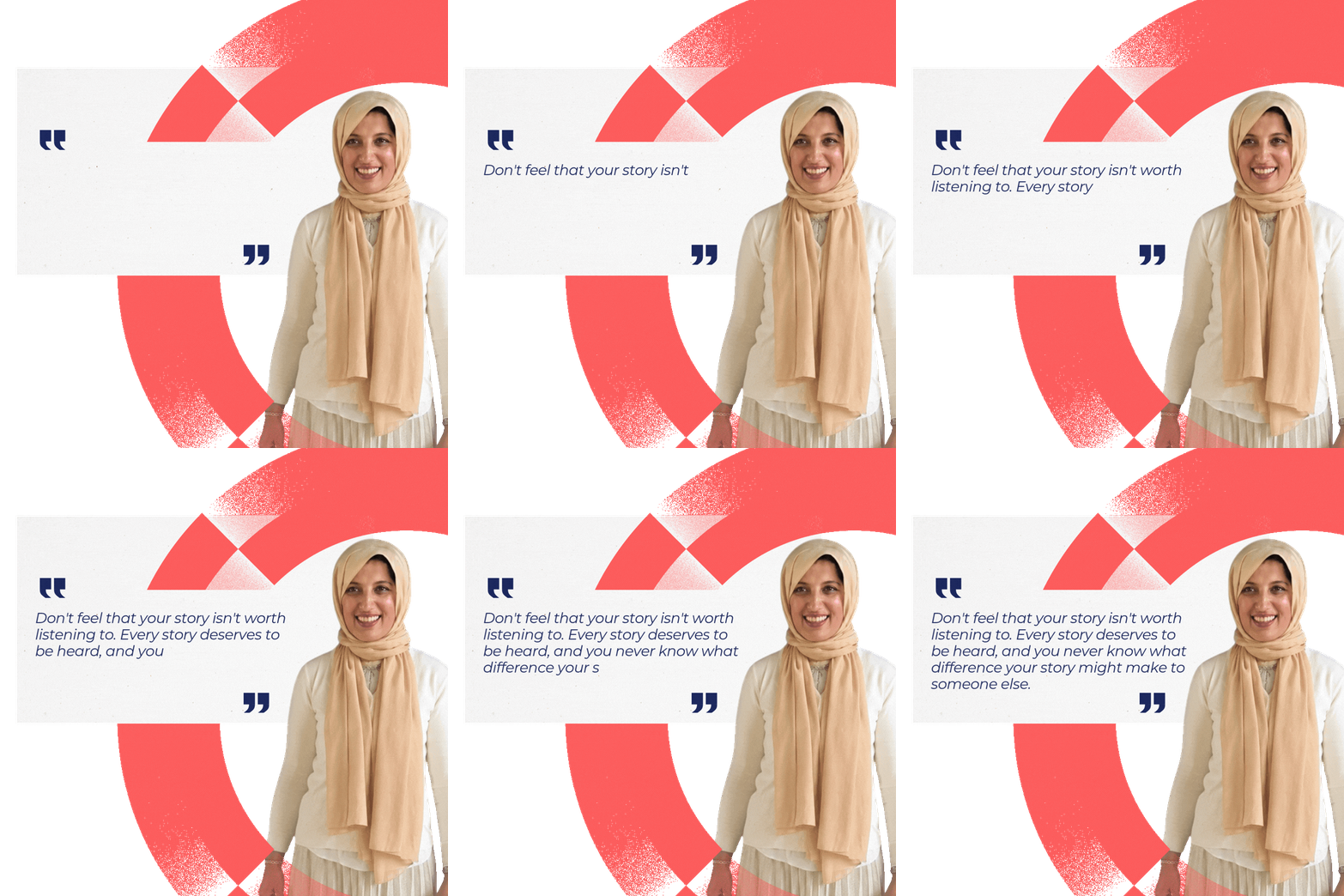
Sometimes people just need someone to say, because they may feel scared, like I once was:
Becoming an NIHR Public Committee Member means a great deal to me. When I look back at where I started in 2003, I never imagined that my community work, my experience caring for my father and my involvement in research would bring me to this point.
Research is about listening to people, understanding their experiences and making sure their voices are heard. But it shouldn’t stop there. People give us their stories because they want things to change.
For me, the real question is: What happens next?