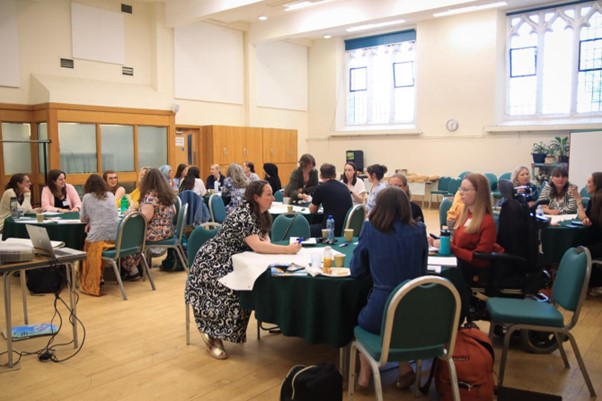
Dr Ruth Naughton-Doe and Dr Kate Morton from the University of York and NIHR Applied Research Collaboration Yorkshire and Humber researcher, hosted a conference in Sheffield on 13th May, focused on nature-based interventions (NBIs) and their role in supporting mental and physical health outcomes for parents, caregivers and their children (0-11). The event brought together 30 academics, clinicians, and practitioners from England working in and around nature-based approaches, with a shared interest in how outdoor spaces can offer emotional, social, and psychological support.
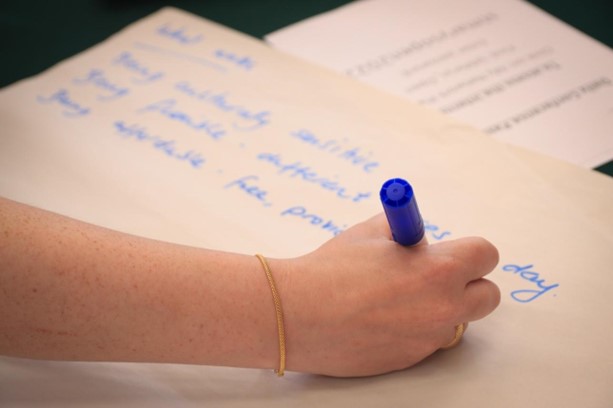
Throughout the day, attendees helped shape the conversations. Q&A sessions followed each block of talks, with thoughtful reflections on what’s working, what’s not, and where research and practice should head next. These discussions fed into an interactive workshop to close the day, where participants explored questions around effectiveness, access, barriers, and future directions for NBIs. The live illustrator on the day, Alison Spaul of Sketchi, produced a visual summary of our conversations.

What makes NBIs work – and what gets in the way
Attendees emphasised that emotional and physical safety, relationship-building, cultural sensitivity, and familiarity with both people and place were core ingredients of effective NBIs. The importance of trust, in the facilitators and wider systems, came up repeatedly, especially for those who might feel excluded from traditional services. There was a consensus that who delivers the intervention matters just as much as how it is delivered, with calls for more facilitators from the communities being engaged. Challenges discussed included inconsistent funding, limited access to green spaces, stigma around engaging with nature, and the difficulty of measuring outcomes in flexible, relational interventions. There were conversations around the term ‘intervention’ and whether it fits the work being done, and the risk of excluding people through language that feels clinical or alien was noted. Future directions included calls for a national network or special interest group to foster connection, shared tools, and funding awareness. Attendees stressed the need for methodological innovation and co-production, especially with marginalised groups. Ensuring the inclusion of marginalised communities was recognised as central to the future of NBIs. The importance of peer support, community champions and flexible approaches grounded in trust and lived experience was highlighted.
Looking ahead: where next for NBIs?
The conference highlighted the growing momentum behind NBIs and the power of collaboration across sectors and communities. Many attendees left with new connections and a shared sense of purpose, with several already exploring opportunities to work together. Building on the day’s insights, attendees plan to co-author a collaborative research paper to capture learning from the event and explore future directions for research and practise. We look forward to continuing these conversations and working together to make nature-based approaches more accessible, inclusive and impactful.
Lightning talks and contributors:
We’re grateful to the 12 speakers who shared work spanning research, practice, and lived experience. Topics included perinatal mental health, early years development, and community-led NBIs. Speakers included:
- Scoping Review of Green Space Interventions for Parents/Caregivers: Lois Armour and Emma Standley
- The Mother Nature Project: Co-designing and Piloting a Postnatal Nature-Based Intervention: Katie Hall
- Light Peer Support – Perinatal Mental Health and Health Walks: Saima Ahmed
- Co-designing a Muslim Women’s Perinatal Walking Group to Reduce Loneliness: Ruth Naughton-Doe
- Forest School in Early Childhood Education: Helen Young
- Working with a Forest School to Provide Alternative Provision for Primary School Aged Children Excluded from Mainstream Classes: Louise Tracey
- Qualitative Evaluation of the Tree Babies and Tots Intervention: Sarah Compton
- Mother-Well Project: Exploring Quality of Life and Nature-Based Interventions for Postnatal Mothers from Minority Groups: Marta Santillo
- Exploring Nature-Based Interventions to Support Pregnant Women’s/Person’s Mental Health and Wellbeing: Katrina d’Apice
- Nature Connection Interventions for Primary Age Children: Hannah Armitt
- Launching a Partnership Toolkit to Support More Parents to Get Walking with Their Babies and Children: Katy O’Neill Gutierrez (Blaze Trails)
If you want to get involved in our work or hear more, please contact nabiha.waheed@york.ac.uk
or join the Family Nature Interventions Mailing List
Connect with others interested in the positive impact of nature on families by joining our new mailing list, click here to join.
Thank you to the funders for this event- the NIHR Three Schools Mental Health Programme (Award MH067) and the Yorkshire and Humber Applied Research Collaboration Mental Health Theme.