Damp and mould compromise indoor air quality (IAQ) in millions of European homes. Epidemiological evidence links damp and mould exposure to increased risk of respiratory diseases and symptoms in children. However, longitudinal evidence from the UK remains limited, despite its older housing stock and wet, humid climate.
We investigated associations between damp and mould and respiratory health in the Born in Bradford birth cohort (Bradford, UK) among 2594 children aged 3–5, with follow-up for new disease development age 7-11 (n = 1543). We report descriptive analyses of damp and/or mould by household factors and deprivation levels. Unadjusted and adjusted odds ratios (OR) and incidence-rate ratios (IRR, longitudinal analyses only) were estimated for multiple damp and mould indicators in relation to asthma, hay fever (indicator of allergies), wheeze, and secondary outcomes reflecting symptom severity using Logistic and Poisson Regression. Models controlled for individual, household, and neighbourhood confounders, including socioeconomic status and air pollution. Additional analyses were conducted amongst children who did not move house between survey years.
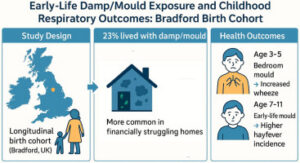
A quarter (23%) of children lived with damp and/or mould in early childhood and 3% had mould in their bedrooms. In cross-sectional analyses, mould in the bedroom was significantly associated with a higher adjusted OR of wheeze in early childhood (age 3-5). Early-life exposure to all damp and mould indicators was significantly associated with an increased adjusted-IRR of new reported hay fever in later childhood (age 7-11) (range of IRRs: 1.42 – 1.96 for children who did not move house). Adjusted-IRRs for incident asthma indicated a positive association with damp/mould, but were not statistically significant, likely due to limited sample size reducing statistical power.
Our findings are consistent with the broader literature highlighting that damp, and particularly mould, is a risk factor for respiratory illness and allergy in children. Housing and public health interventions aimed at reducing exposures, particularly in bedrooms, may enhance child health and wellbeing.
Please contact Tiffany Yang (tiffany.yang@bthft.nhs.uk) for any queries. This paper is linked to the Healthy Homes and Healthy Urban Places research projects / programmes.